
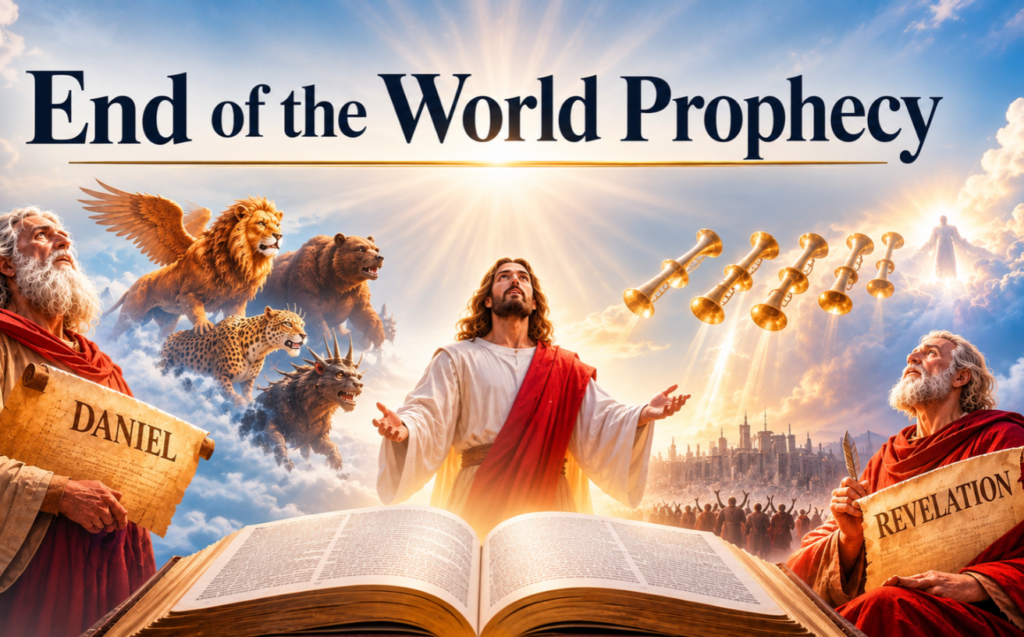
Two biblical passages, written centuries apart, contain a remarkably similar expression. In Daniel 7:25, a mysterious period is described as “a time and times and the dividing of time.” Much later, in Revelation 12:14, John uses the same expression while describing a woman being protected in the wilderness.
Why would two different writers, separated by centuries, use such similar language when describing prophetic events?
Was John referring back to something Daniel had already seen? And if both accounts are connected, could they be describing different parts of the same end-times timeline?
This is one of the fascinating questions surrounding the End of the World Prophecy and the relationship between Daniel and Revelation. Exploring this connection opens the door to a much bigger question: Are these biblical accounts independent prophecies, or are they revealing the same events from different perspectives?
A Beast Appears in Two Different Visions
Consider another interesting connection.
In Daniel 7, Daniel sees four great beasts rising from the sea. Each beast represents a kingdom, and the vision introduces a sequence of rulers and events that shape the prophetic picture.
Centuries later, John describes a beast rising from the sea in Revelation 13. This beast has characteristics resembling the creatures Daniel saw, including features associated with a leopard, a bear and a lion.
This similarity is difficult to overlook.
Daniel 7 describes these animals individually, while Revelation 13 brings several of their characteristics together in one beast. Both passages also discuss authority, power and opposition to God’s people.
So, why does John use imagery that readers of Daniel would recognise?
There are different explanations. Some understand the imagery as symbolic of recurring opposition to God throughout history. Others connect it with historical kingdoms and rulers, while Futurist interpretations often associate it with a future end-times power.
However, one important question remains: Could John be building upon Daniel’s earlier vision to describe the same prophetic sequence from another perspective?
Three Accounts, One Prophetic Story?
The connection becomes even more interesting when we introduce a third biblical account: Jesus’ Olivet Discourse.
In Matthew 24, Mark 13 and Luke 21, Jesus discusses the events surrounding the end of the age. His teaching includes deception, wars, tribulation, signs in the heavens and His coming.
But there is a particular detail worth noticing.
In Matthew 24:15, Jesus directly refers to Daniel’s prophecy concerning the abomination of desolation. He does not introduce the subject as an entirely unfamiliar idea. Instead, He points His listeners towards something already recorded in Daniel.
Now consider the three accounts together:
- Daniel: Presents visions of kingdoms, prophetic periods and events leading towards the end.
- Jesus’ Olivet Discourse: Describes signs and events associated with the end of the age, including a direct reference to Daniel.
- John’s Revelation: Presents visions involving seals, trumpets, bowls, beasts and the return of Christ.
Each account contains details that invite comparison with the others.
Could these three accounts be describing one prophetic chronology rather than three unrelated sequences?
This is the central question explored by Last Day Last Trump (LDLT) Ministries.
Why Christians Interpret the End Times Differently
Despite these connections, Christians do not agree on how biblical prophecy should be understood. Over centuries, four major schools of interpretation have developed.
Understanding them is important because each approach changes how readers interpret the events described in Daniel and Revelation.
1. Idealism
Idealism understands Revelation primarily through symbolism. Its visions are generally viewed as representing the ongoing spiritual conflict between good and evil, rather than a straightforward chronological prediction of future events.
2. Preterism
Preterism interprets many of Revelation’s prophecies as having already been fulfilled in historical events, particularly those surrounding the destruction of Jerusalem in AD 70. Different forms of Preterism also differ on how much prophecy remains future.
3. Historicism
Historicism views Revelation as an unfolding account of events throughout the history of the Church. Its symbols are interpreted in relation to different historical periods, rulers and religious developments.
4. Futurism
Futurism understands most of Revelation’s major prophetic events as still awaiting fulfilment. It often focuses on future tribulation, the Antichrist, Christ’s return and the final judgement.
These approaches are not simply different labels. They represent different ways of arranging and understanding the same biblical passages.
For someone trying to understand the end of the world prophecy, the challenge is deciding how the various visions, symbols and prophetic periods fit together.
What If Daniel, Jesus and John Are Describing the Same Timeline?
Here is where the LDLT approach becomes particularly interesting.
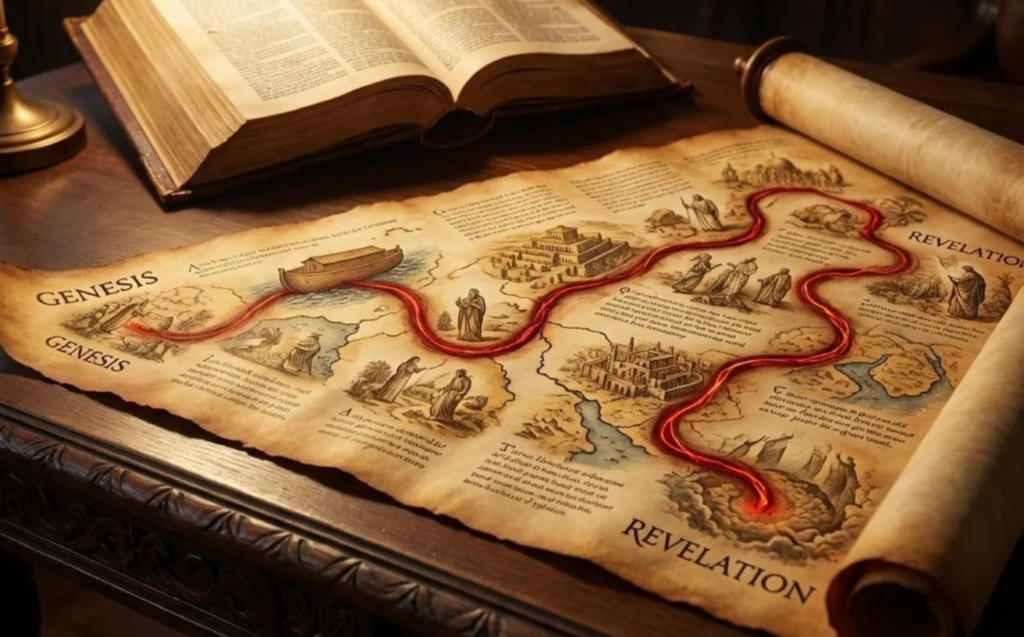
Last Day Last Trump Ministries presents the argument that Daniel’s prophecies, Jesus’ Olivet Discourse and John’s Revelation describe the same prophetic events in the same order.
Its central message is:
One Chronology. Told Three Times.
Rather than treating the three accounts as separate prophetic timelines, the commentary examines their similarities and places their events alongside one another.
This approach encourages readers to compare the passages instead of studying each book in isolation.
For example, consider the following questions:
- Do the events described in Matthew 24 correspond with the sequences in Revelation?
- How does Daniel’s prophecy of the seventy weeks relate to the events described by John?
- Are the seven seals, seven trumpets and seven bowls successive events, or do some of their descriptions overlap?
- Can the prophetic periods mentioned in Daniel and Revelation be understood within one consistent framework?
These are not minor details. How readers answer them can significantly change their understanding of the entire end-times narrative.
LDLT explores these questions through detailed commentary, scriptural references and original chronological diagrams that help readers examine the proposed connections visually.
The Last Trump: Another Piece of the Prophetic Picture
There is another connection that deserves attention.
In 1 Corinthians 15:52, Paul writes about the resurrection of the dead and the transformation of believers at the last trumpet. This passage is frequently discussed in relation to the Rapture.
But where does this event fit within the wider prophetic timeline?
The question becomes even more interesting when the final three Feasts of the Lord are considered:
- Feast of Trumpets: Explored in relation to the Last Trump.
- Day of Atonement: Considered in the context of judgement and atonement.
- Feast of Tabernacles: Examined in relation to the fulfilment of God’s promises.
LDLT brings these themes into its broader prophetic framework, inviting readers to investigate how the Last Trump, resurrection, Rapture and final events may connect.
The commentary goes beyond simply listing prophetic signs. It encourages readers to examine the relationships between different biblical passages and consider their place within the proposed chronology.
Frequently Asked Questions
The Bible discusses the end of the age through Daniel’s visions, Jesus’ Olivet Discourse and John’s Revelation. These passages address tribulation, judgement, Christ’s return and the resurrection of the dead.
Some interpretations connect Daniel and Revelation as accounts of the same prophetic events. Last Day Last Trump presents this argument by aligning Daniel’s prophecies, Jesus’ teaching and John’s visions into one proposed chronology.
Daniel 7:25 and Revelation 12:14 both use the expression “a time, times, and half a time.” The repeated expression is an important point of comparison when studying the relationship between the two prophetic books.
The four major approaches are Idealism, Preterism, Historicism and Futurism. They differ in how they understand Revelation’s symbols and their relationship to historical and future events.
The Last Trump appears in 1 Corinthians 15:52, where Paul connects the final trumpet with the resurrection of the dead and the transformation of believers. Its relationship with the Rapture is interpreted differently among Christian traditions.
Discover the Prophetic Connections with Last Day Last Trump
What if the visions of Daniel, the teachings of Jesus and the Revelation given to John are not separate pieces of an unfinished puzzle, but different accounts that reveal one prophetic sequence?
It is a question worth investigating through Scripture.
Last Day Last Trump (LDLT) Ministries offers a detailed commentary exploring this proposed connection through biblical cross-references, original diagrams and an examination of Idealism, Preterism, Historicism and Futurism.
Available in PDF and EPUB formats, the book gives readers an opportunity to explore the complete argument, understand the proposed prophetic chronology and examine the biblical passages for themselves.
Don’t stop at individual prophecies. Discover how they may fit together. Explore the Last Day Last Trump book and get your copy today.
Related Articles

admin
Author at Last Day Last Trump Ministries.
1 comment